
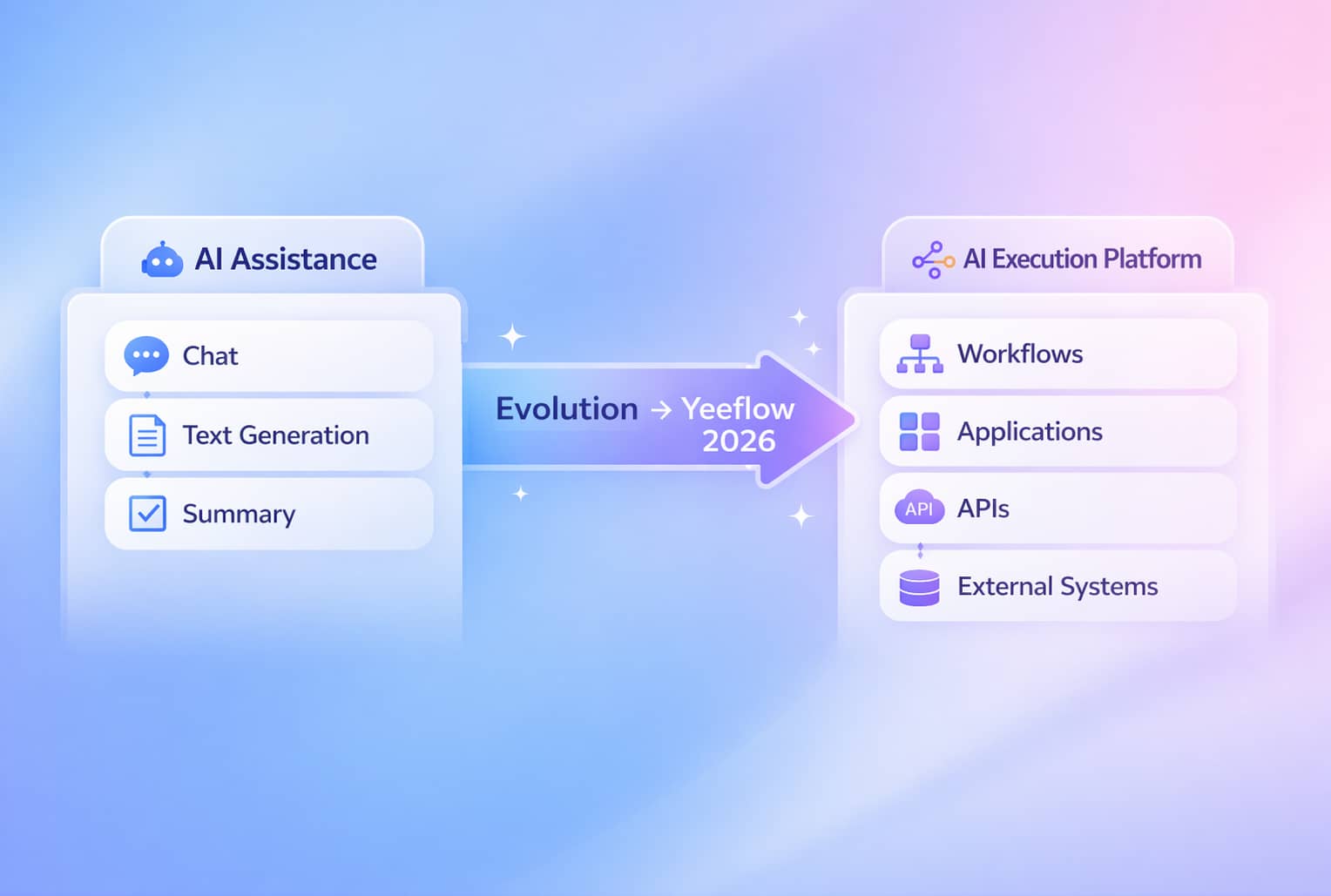
In 2026, Yeeflow is moving beyond the idea of AI as an added feature.
Our direction is clear: Yeeflow is evolving into an enterprise AI application and execution platform — a plat form that helps organizations build business applications faster with AI, use AI inside real business applications, connect AI to workflows and external systems, and turn AI into a more practical layer for real operational work.
The April release is a major step in that direction.
This is not simply a product update with a few isolated additions. It is a meaningful expansion of Yeeflow’s AI plat form across four important dimensions:
· more flexible AI model choice
· more open AI connections
· stronger AI interaction with external systems
· greater portability and extensibility across applications
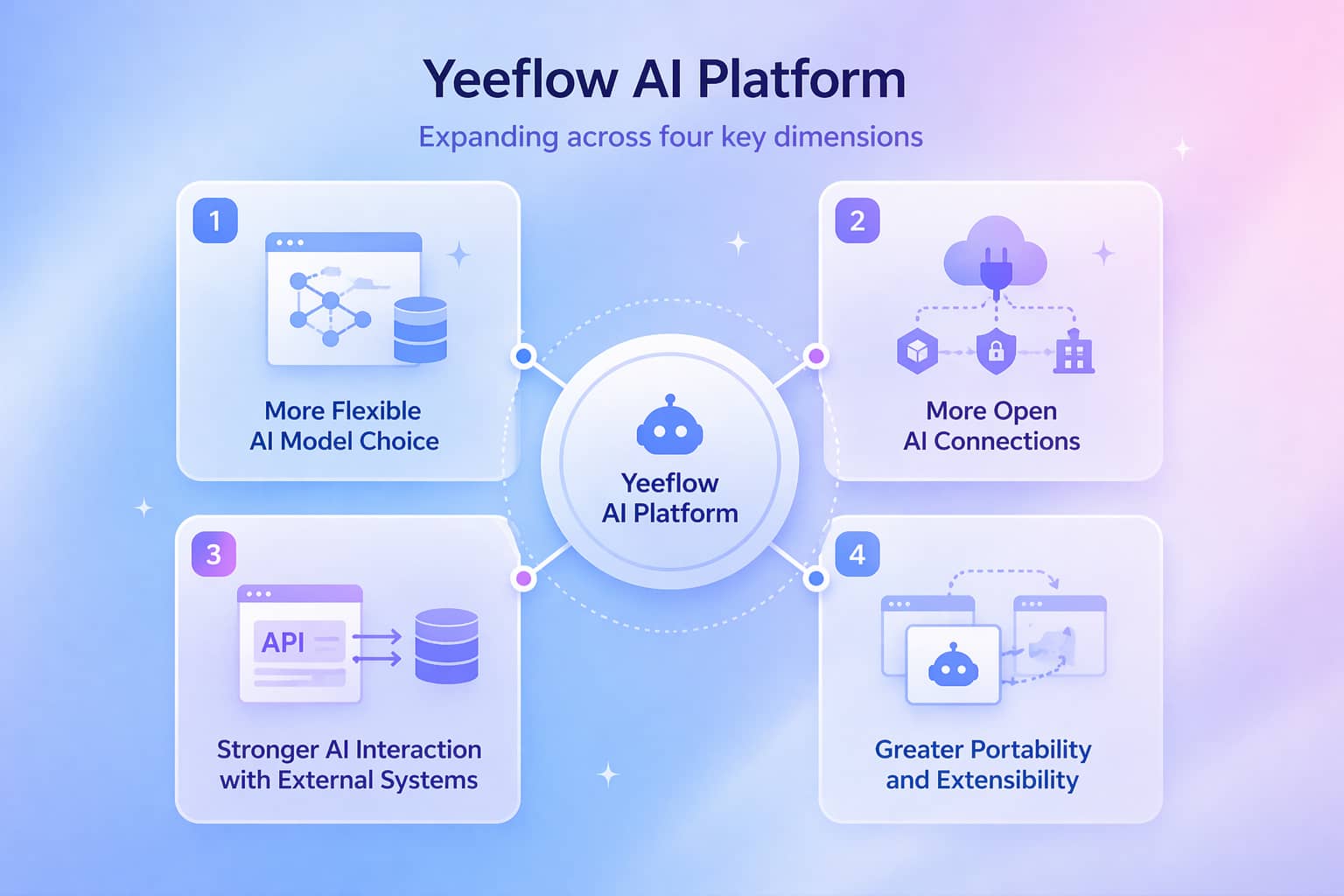
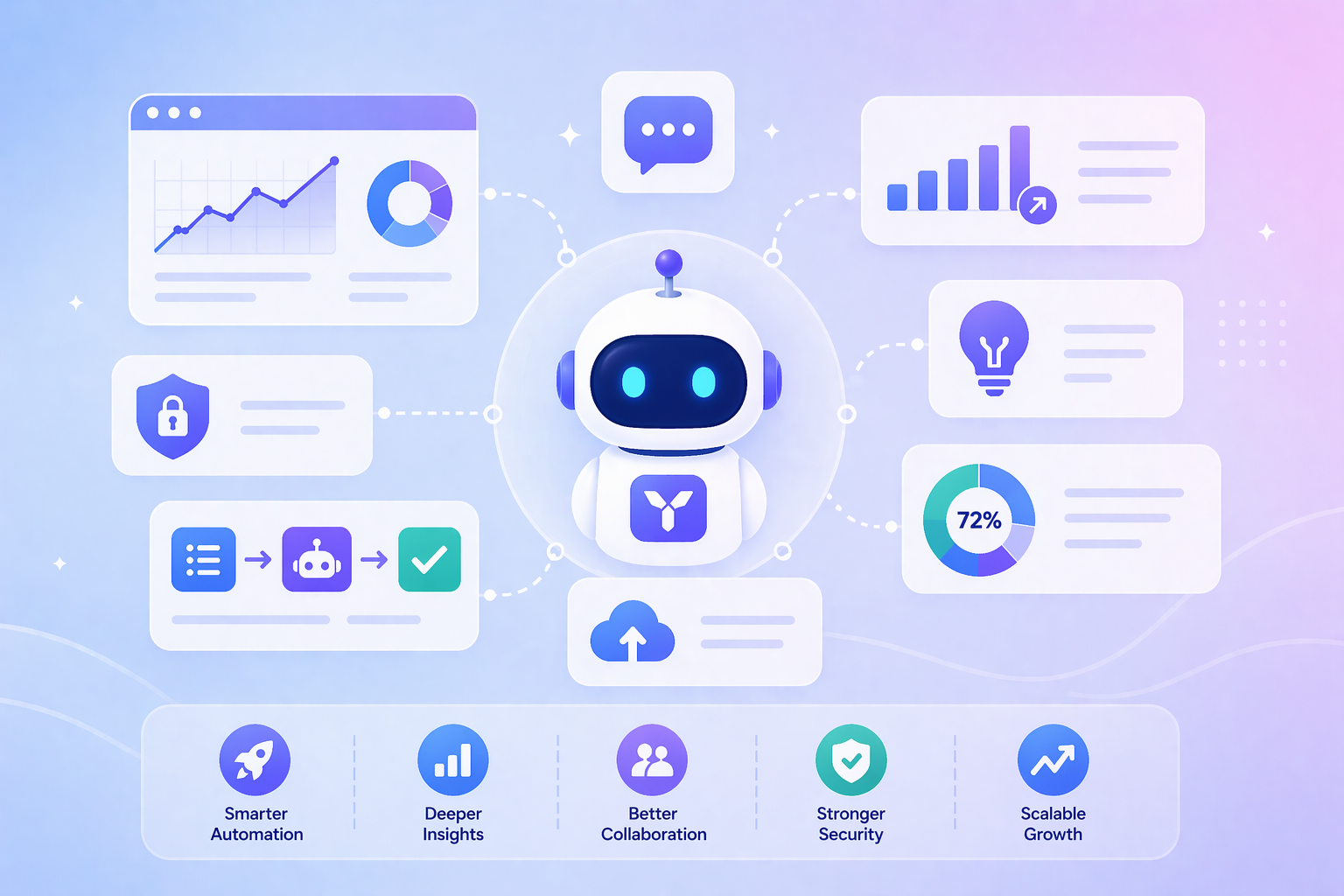
Together, these changes push Yeeflow further beyond AI assistance alone and closer to AI-powered business execution.
Why this release matters
A lot of software platforms can now add AI chat, generate text, or summarize information.
But enterprise customers need more than that.
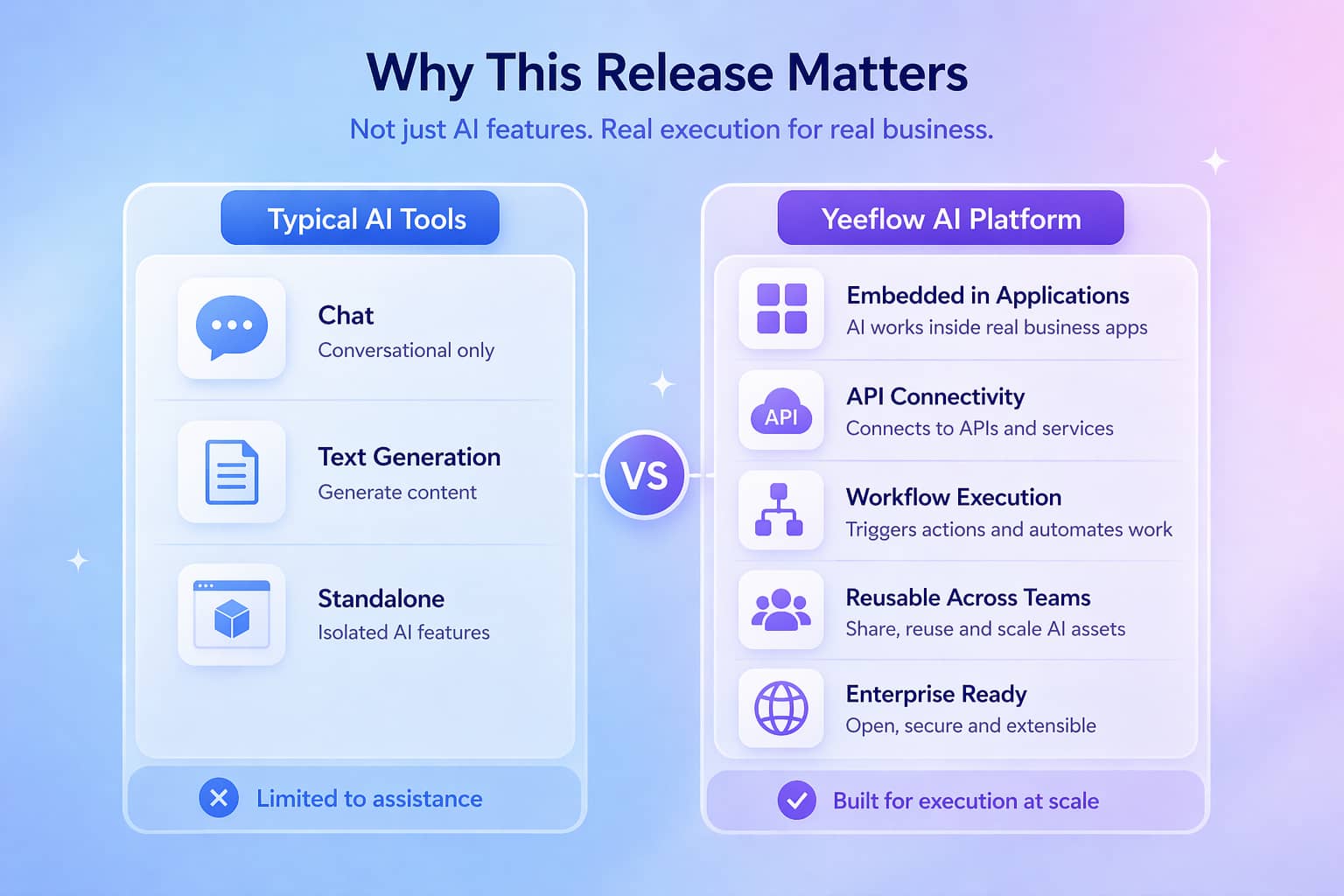
They need AI that can fit different model and deployment requirements, work inside real business applications, connect to external API sand services, support repeatable reuse across teams, and extend beyond fixed no-code boundaries when business requirements demand more flexibility.
That is why the April release matters.
It strengthens Yeeflow as a platform where AI is becoming part of how applications are built, used, extended, and connected to real business operations.
1. More flexible AI model support for real enterprise needs
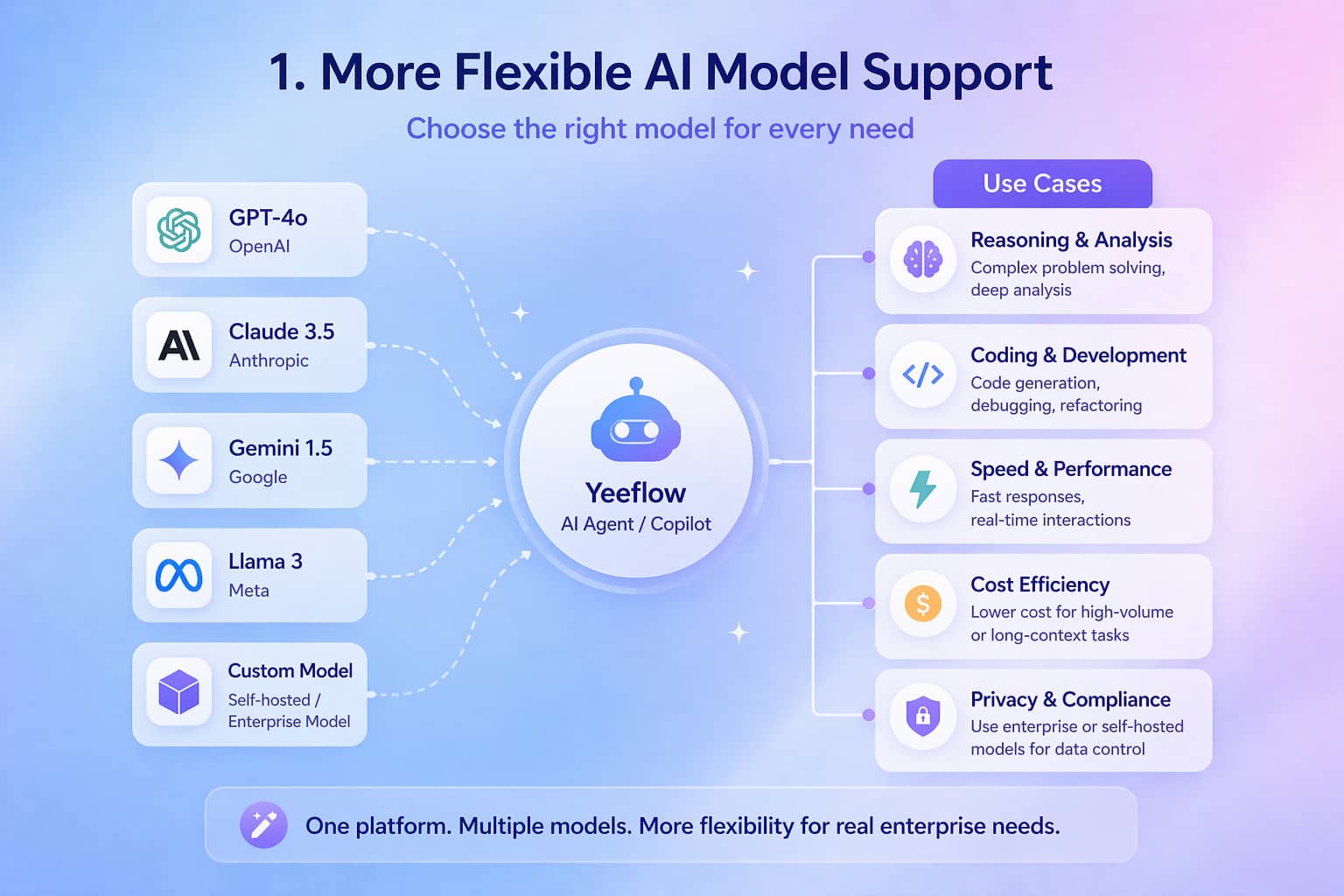
The April release significantly expands model support for AI Agent and Copilot.
Yeeflow now supports a wider range of models, giving customers more flexibility to choose the right option for different needs such as reasoning, coding, speed, or cost efficiency. Instead of forcing every scenario into a single-model approach, Yeeflow is becoming more adaptable to real enterprise requirements.
That matters because enterprise AI adoption is rarely one-size-fits-all.
Different teams and use cases need different trade-offs. Some need stronger reasoning. Some care more about performance and responsiveness. Some prioritize coding support. Others need better cost control.
The real value is not simply that Yeeflow supports more models.
The real value is that Yeeflow becomes a more flexible and credible enterprise AI platform — one that can better fit real business environments instead of forcing customers into a narrow setup.
2. More open AI connections and customer-controlled AI environments
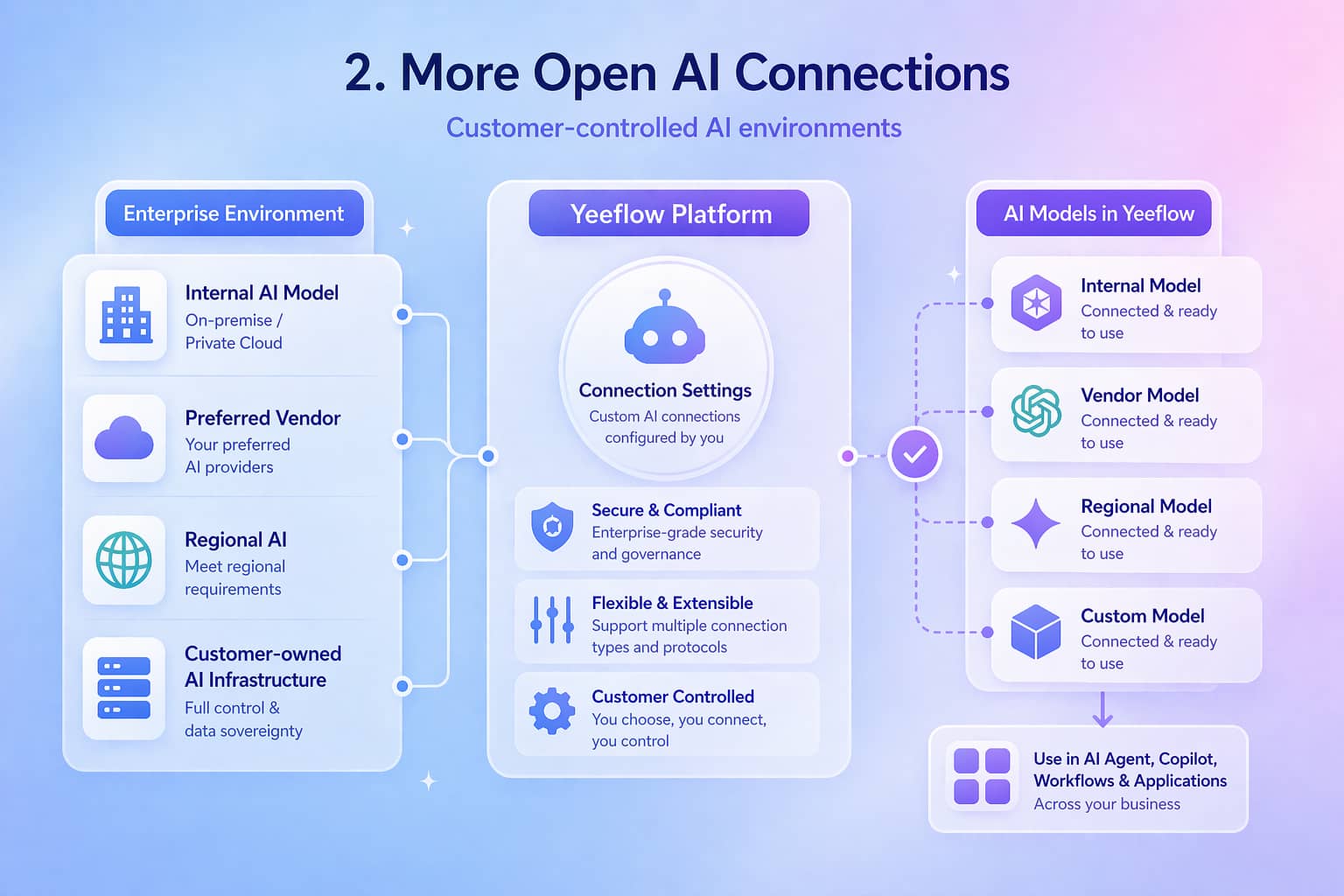
The April release also adds custom AI connections for AI Agent and Copilot.
Customers can now configure their own AI model connections and use those models inside Yeeflow. At the same time, Connection Settings now supports a broader range of AI connection types, making the platform more open and extensible for different enterprise environments.
This is an important step for enterprise customers.
Many organizations do not want to depend on a single AI provider or a fixed AI configuration. They may already have internal standards, prefer red vendors, regional requirements, or customer-owned AI infrastructure.
By supporting custom AI connections, Yeeflow becomes easier to fit into real enterprise environments rather than asking customers to adapt themselves to the platform.
This is also part of a broader product direction: platform extensibility is not an optional extra. It is part of Yeeflow’s strategy.
3.Stronger AI interaction with external systems
One of the most important advances in the April release is the expansion of integration capability.
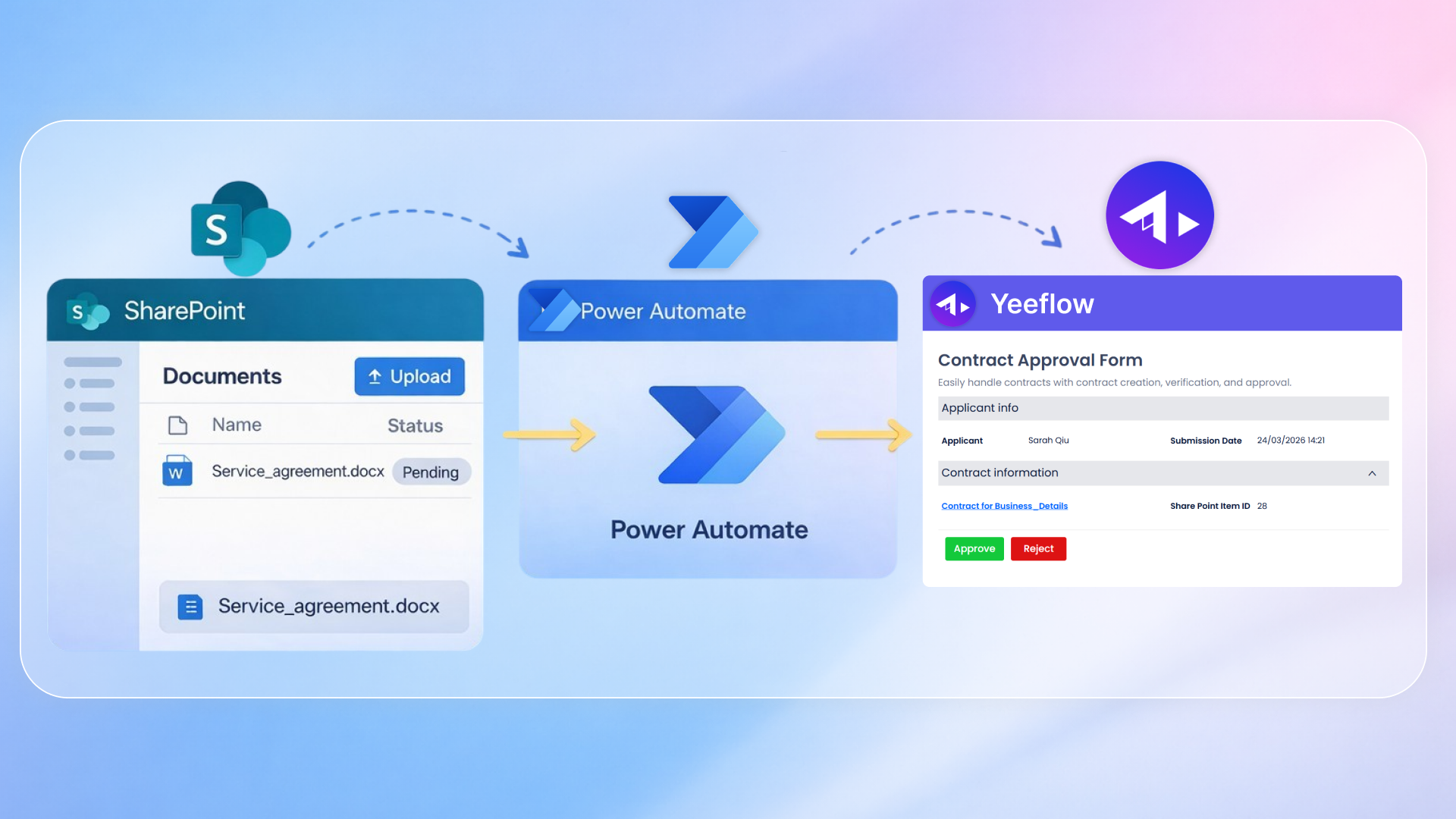
Yeeflow now supports HTTP API (Generic) and OAuth 2.0 API connections in Connection Settings. These can be reused in workflow actions and form actions through HTTP request support.
Just as importantly, AI Agent and Copilot now include the new Call HTTP Request tool.
This allows AI to call HTTP requests directly and interact with third-party systems through configured APIs. Depending on the setup, OAuth authorization can support on-demand sign-in or pre-configured accounts.
This is where the release becomes especially meaningful.
It means AI in Yeeflow is moving beyond answering questions inside a conversation.
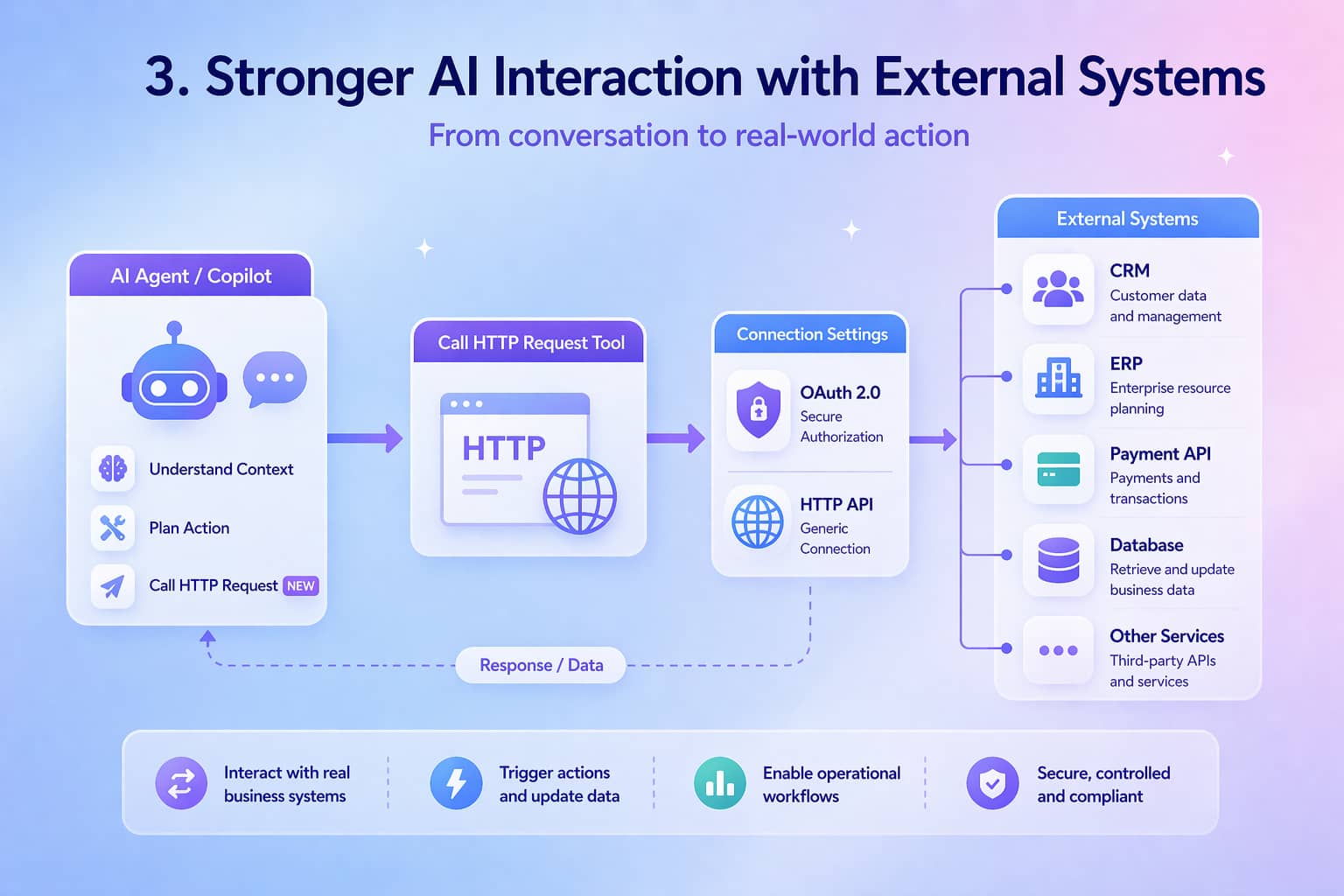
It can now begin interacting with real business systems based on context.
That opens the door to more operational scenarios where AI can retrieve information, trigger actions, and participate in connected workflows instead of staying limited to passive assistance.
This is a major part of Yeeflow’s 2026 direction: AI should not only help users think or write. It should increasingly help organizations execute work across applications, workflows, data, services, and external systems.
4. Better portability and reuse across applications and tenants
The April release also brings major improvements in portability and reuse.
AI Agent and Copilot now support export, import, duplication, and movement across applications. Related AI assets can also be included in application export and package flows, making it easier to move successful configurations across apps and even across tenants.
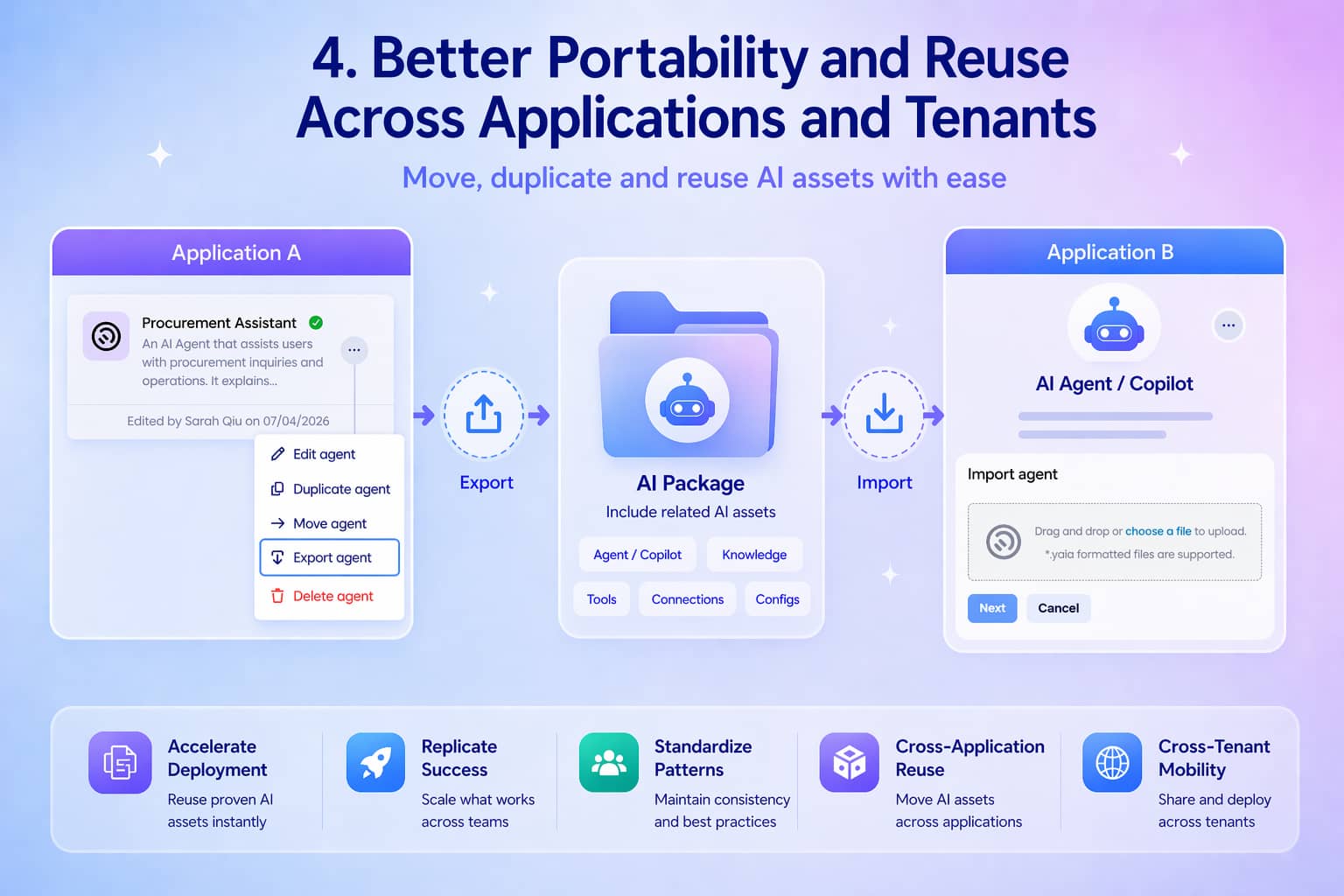
This matters because enterprise adoption does not scale well when every AI asset has to be rebuilt from scratch.
Reusable Agents and Copilots help teams accelerate deployment, replicate proven patterns, standardize successful setups, and prepare for broader solution packaging in the future.
What looks like a feature for operational convenience is actually a strategic step toward scalable reuse.
And scalable reuse is essential if AI is going to become a practical delivery layer across teams, departments, partners, and customer environments.
5. More extensibility through AI-assisted coding
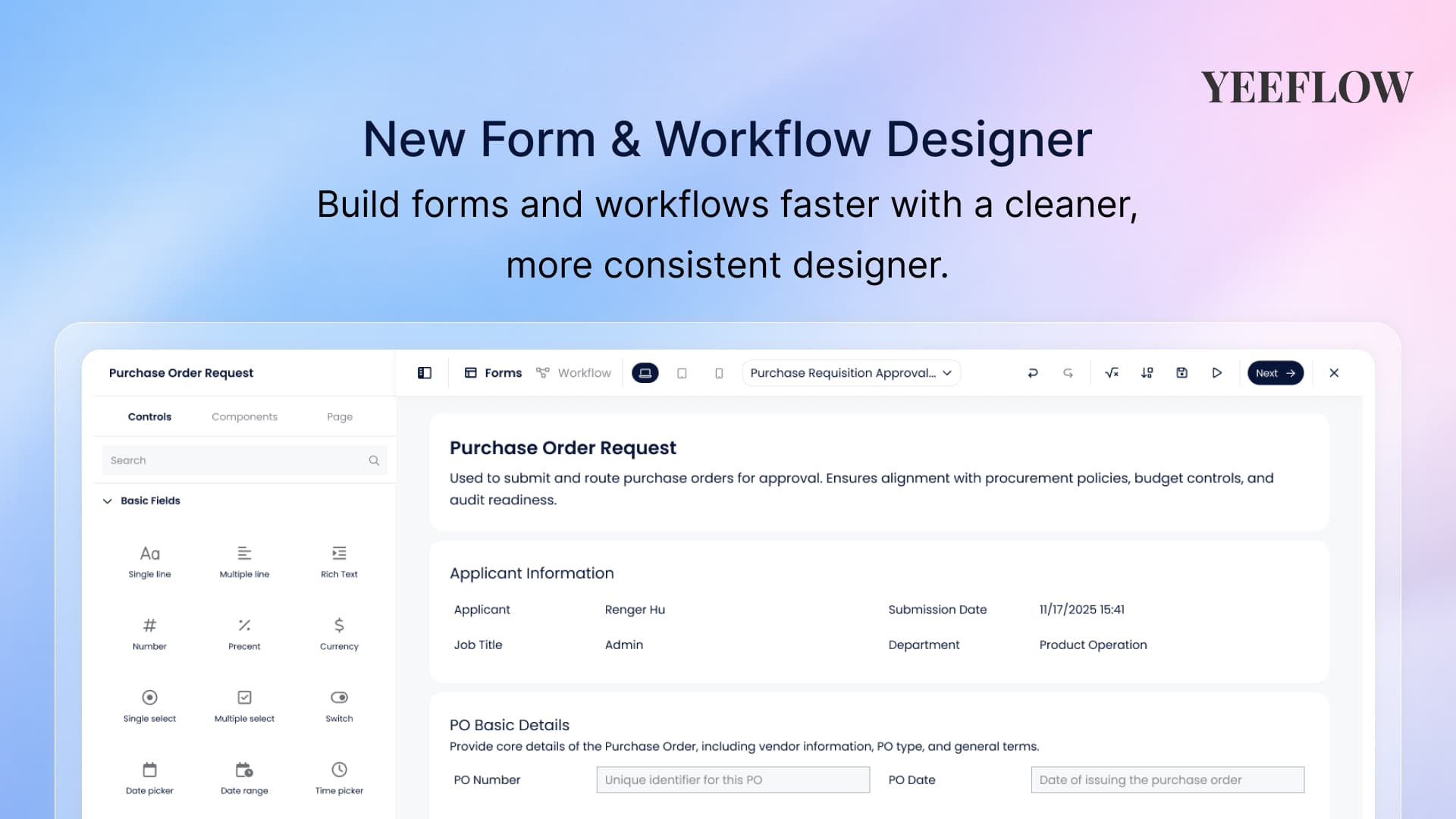
The April release also strengthens Yeeflow for advanced use cases through custom code control and custom code action with a built-in code editor experience and AI-assisted code generation.
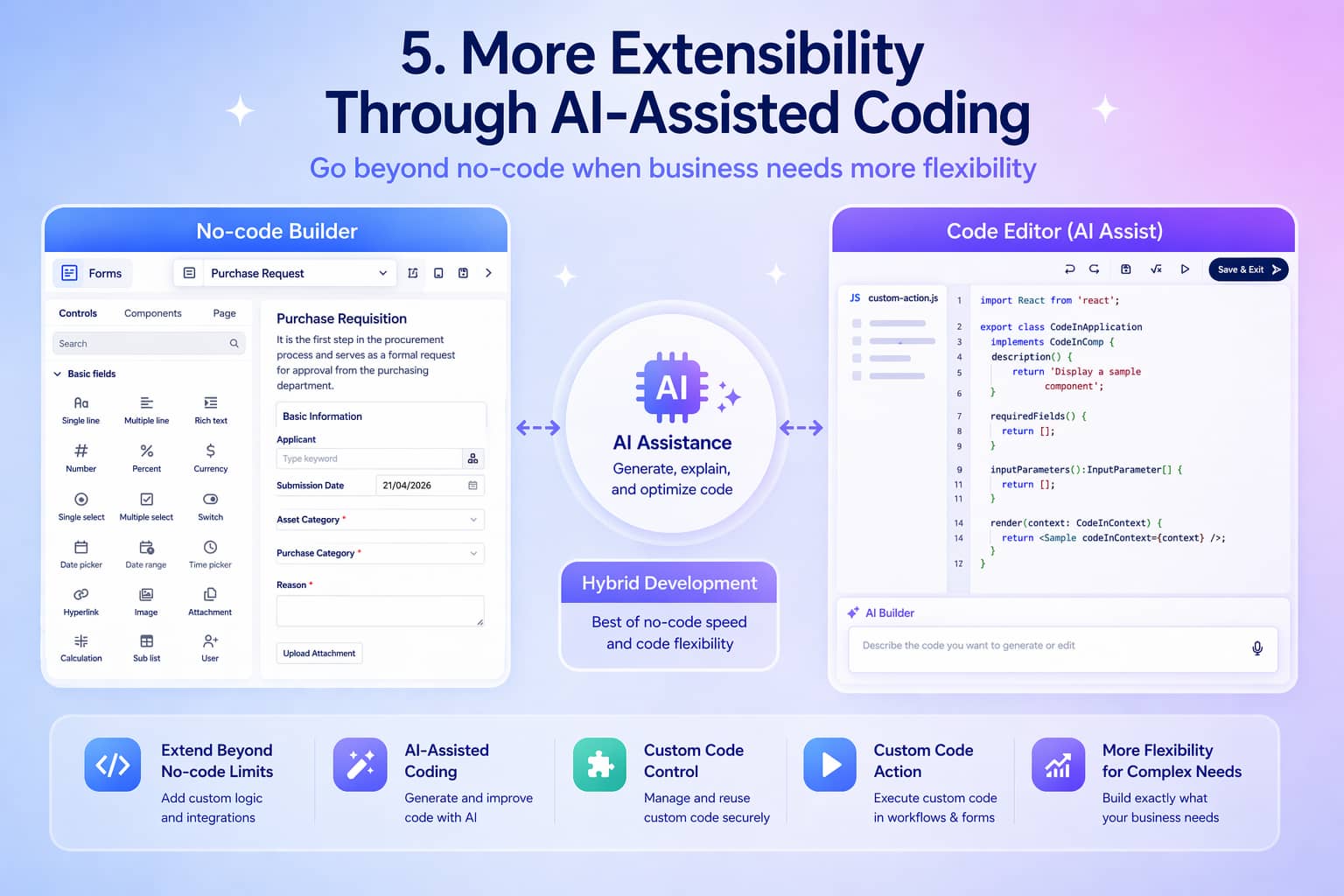
This gives builders a more powerful way to extend applications when standard no-code configuration is not enough.
That matters because not every enterprise requirement fits neatly into a fixed visual builder.
With AI-assisted coding inside Yeeflow, teams can move faster when custom logic is needed, while still working inside the broader structure of a business application platform.
This makes Yeeflow stronger not only for no-code builders, but also for teams that need a more flexible bridge between no-code speed and controlled custom extensibility.
What the April release says about Yeeflow’s direction
Taken together, the April release shows a clear and consistent product direction.
Yeeflow is becoming:
· a more flexible AI platform with broader model and connection choice
· a more open platform for enterprise AI environments
· a more execution-oriented platform where AI can begin interacting with external systems
· a more reusable platform for scaling AI assets across applications and tenants
· a more extensible platform for advanced business logic

This is exactly the kind of shift that matters in 2026.
The market does not need more disconnected AI features.
It needs platforms that help organizations do real work better —building faster, connecting systems more easily, extending logic where needed, and moving from isolated AI assistance toward practical AI execution.
That is the direction Yeeflow is building.
What comes next
The April release is not the final destination. It is a strong foundation.
As Yeeflow continues through Q2, the next stage is about extending AI execution and platform openness even further — helping AI do more work through tools, services, and connected platform capabilities while keeping the product direction practical and credible.
That means the story is becoming clearer with each release:
· build business applications faster with AI
· use AI inside real business applications
· connect AI to systems and services
· move toward more practical AI execution
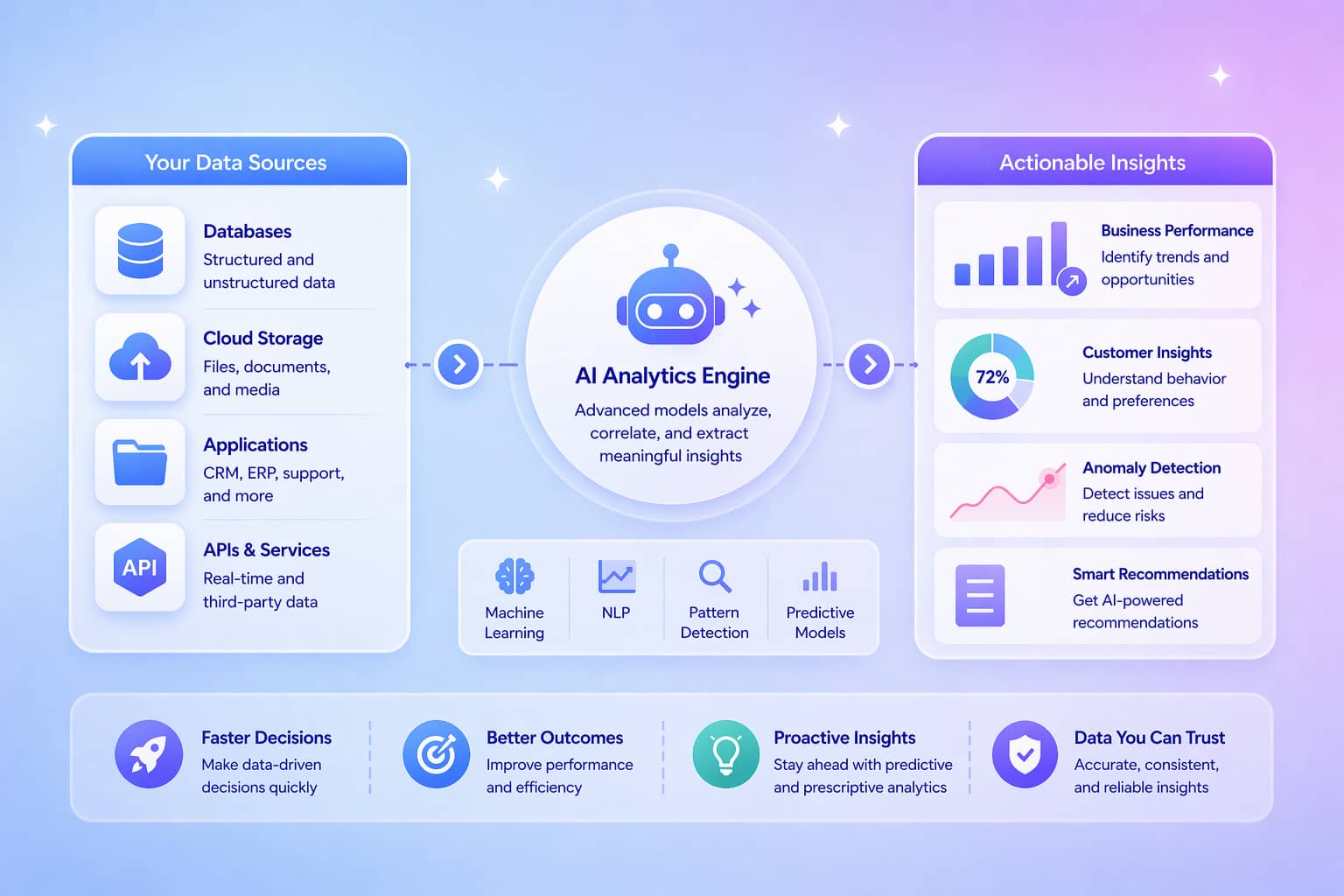
Final thought
The biggest takeaway from Yeeflow’s April release is simple:
AI becomes far more valuable when itis connected to real business work.
Not AI as a disconnected feature.
Not AI as a generic chat layer.
But AI as part of how business applications are created, extended, connected, and executed.
That is the direction Yeeflow is building toward in 2026.
And the April release is one of the clearest proof points so far.