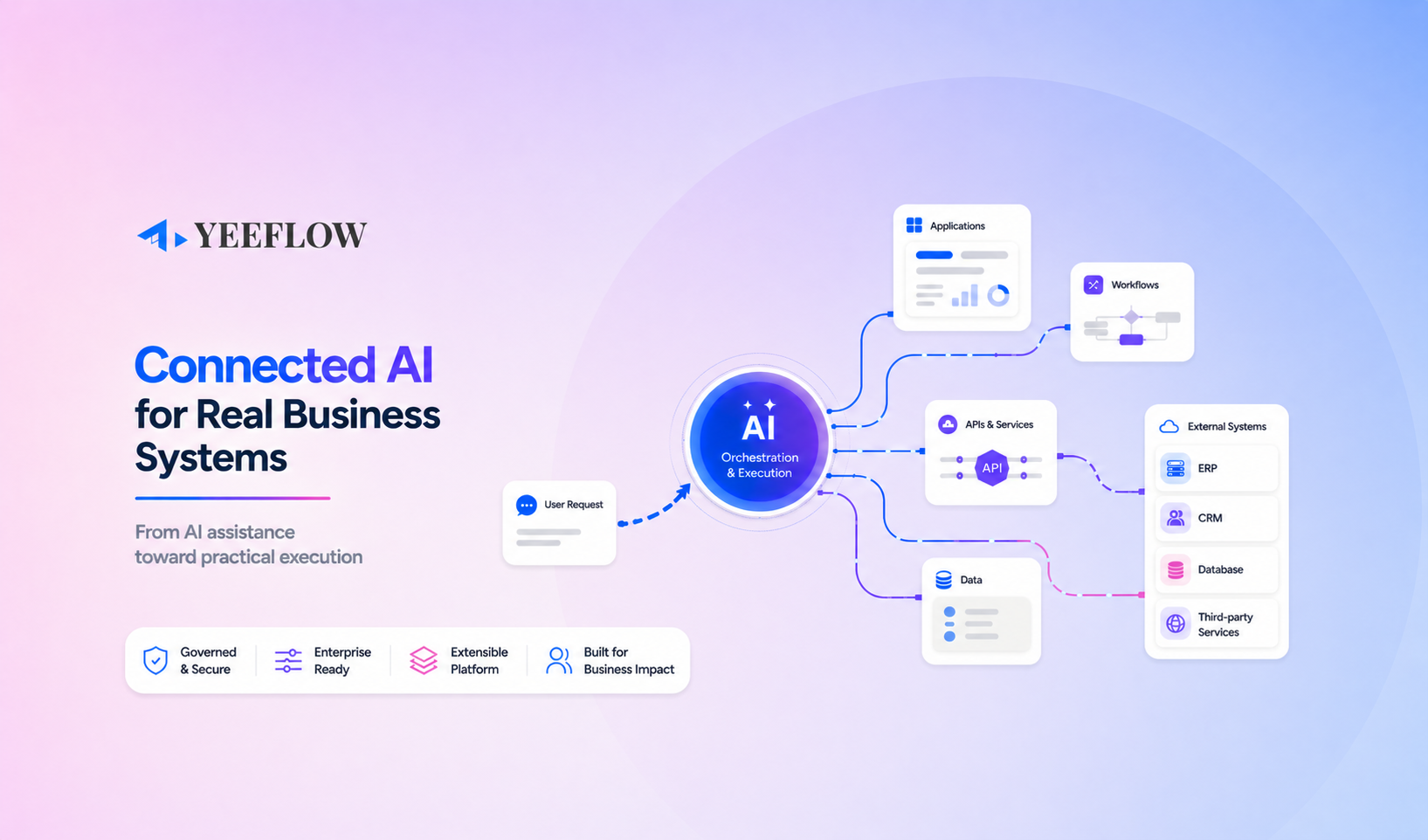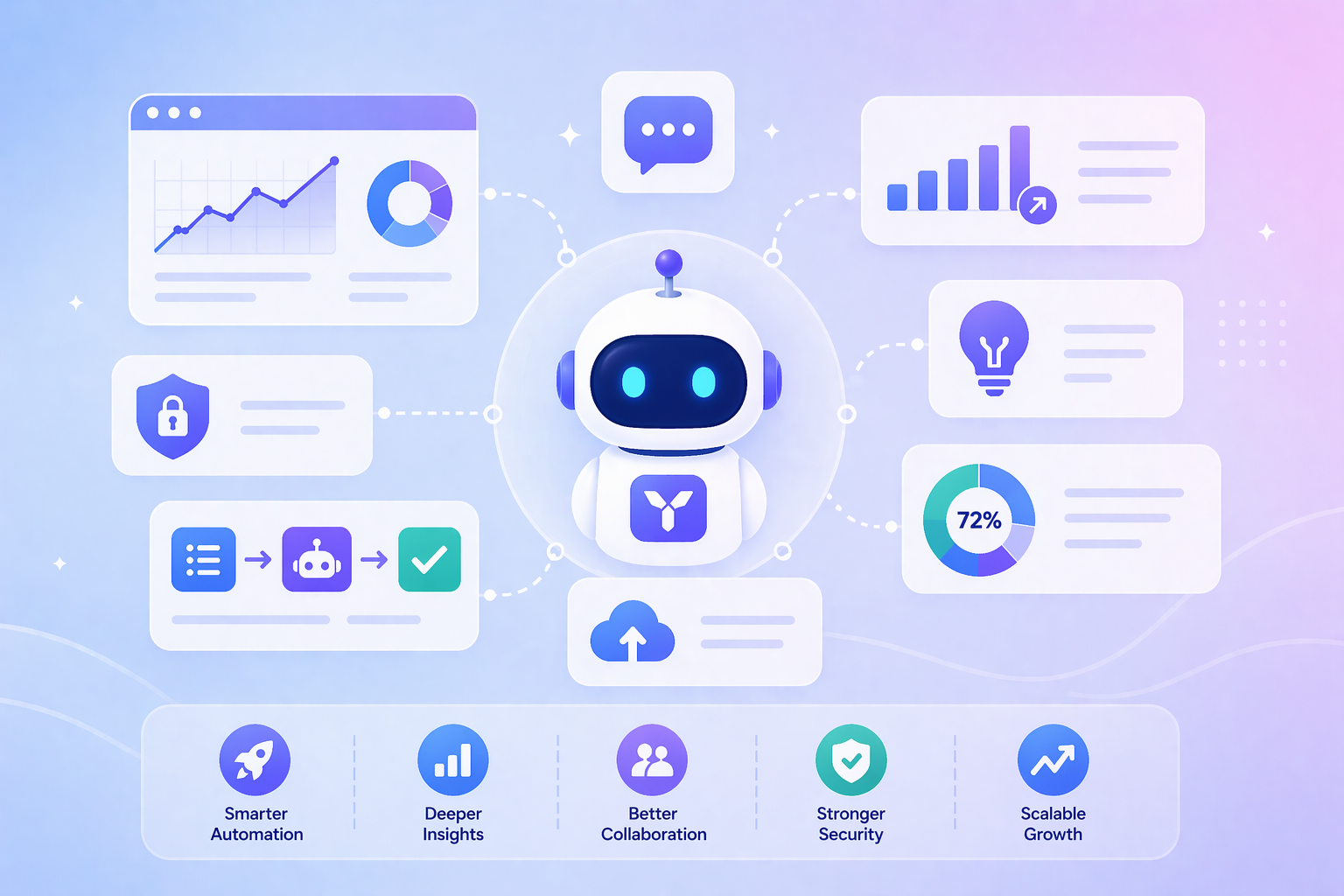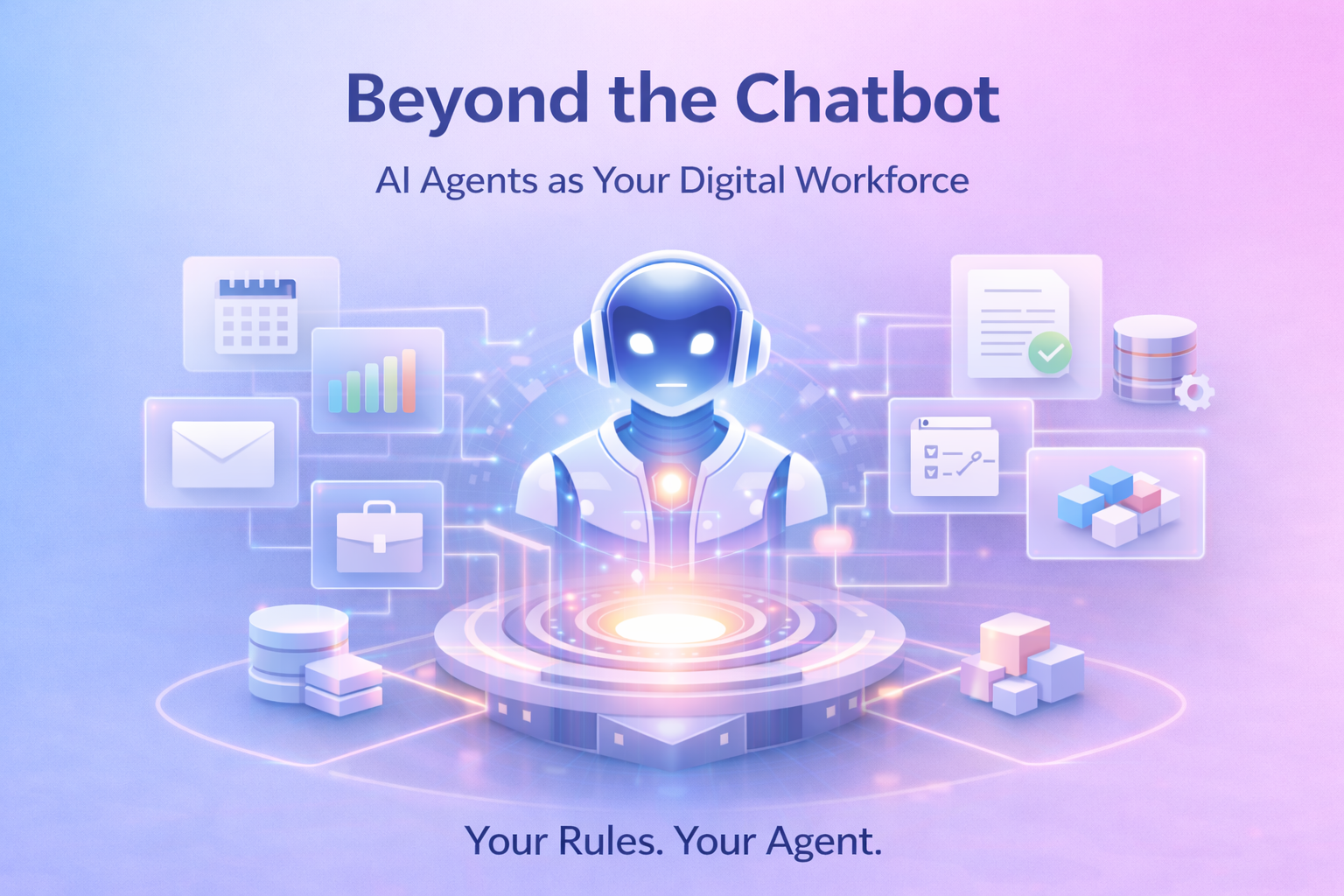

When most people think of business AI, they picture a chatbot—a helpful but limited tool that answers questions based on a script. It’s a useful first step, but it barely scratches the surface of what’s now possible. The next evolution is already here: the AI Agent.
Unlike a chatbot that merely finds information, an AI Agent is a digital team member, empowered by modern AI to understand requests, reason through problems, and use your actual business software to get the job done. It doesn't just talk; it works.
This post reveals four surprising capabilities of these new AI Agents that are fundamentally changing how businesses automate complex work and create a true digital workforce.
1. They’re More Than a Chatbot—They’re a Digital Coworker
The single biggest differentiator for AI Agents is their ability to perform actions using "Tools." This ability to act is the critical threshold that separates a mere information-retrieval tool from a genuine automation engine. Instead of just answering a question, an agent can take the next step and complete the task itself, becoming an active participant in your business processes.
Think of it as giving your new digital coworker "hands" to work within your business systems. These actions create direct operational impact and include the ability to:
● Create new records: "Create a new ticket from a user description" or register a new product.
● Update existing data: "Mark an order as ‘Completed,’ or decrease inventory quantity" based on a request.
● Trigger complex processes: "Start a purchase request, travel approval, or expense reimbursement process from a natural language request."
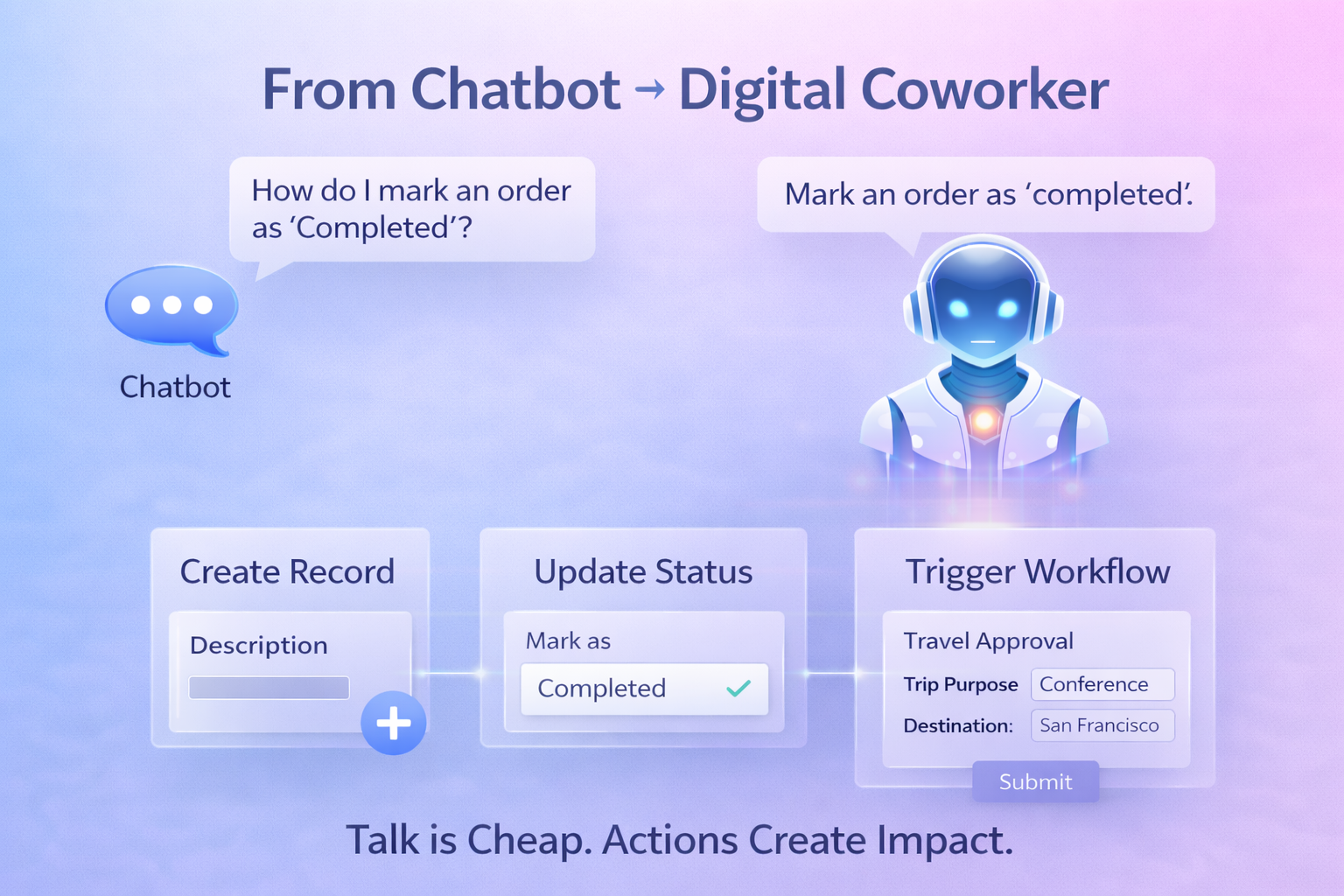
This shift from passive knowledge retrieval to active task execution is the foundation of operational excellence in the AI era.
...transforming it from a “chatbot” into an operational business assistant.
2. You Define Their "Brain" and Personality
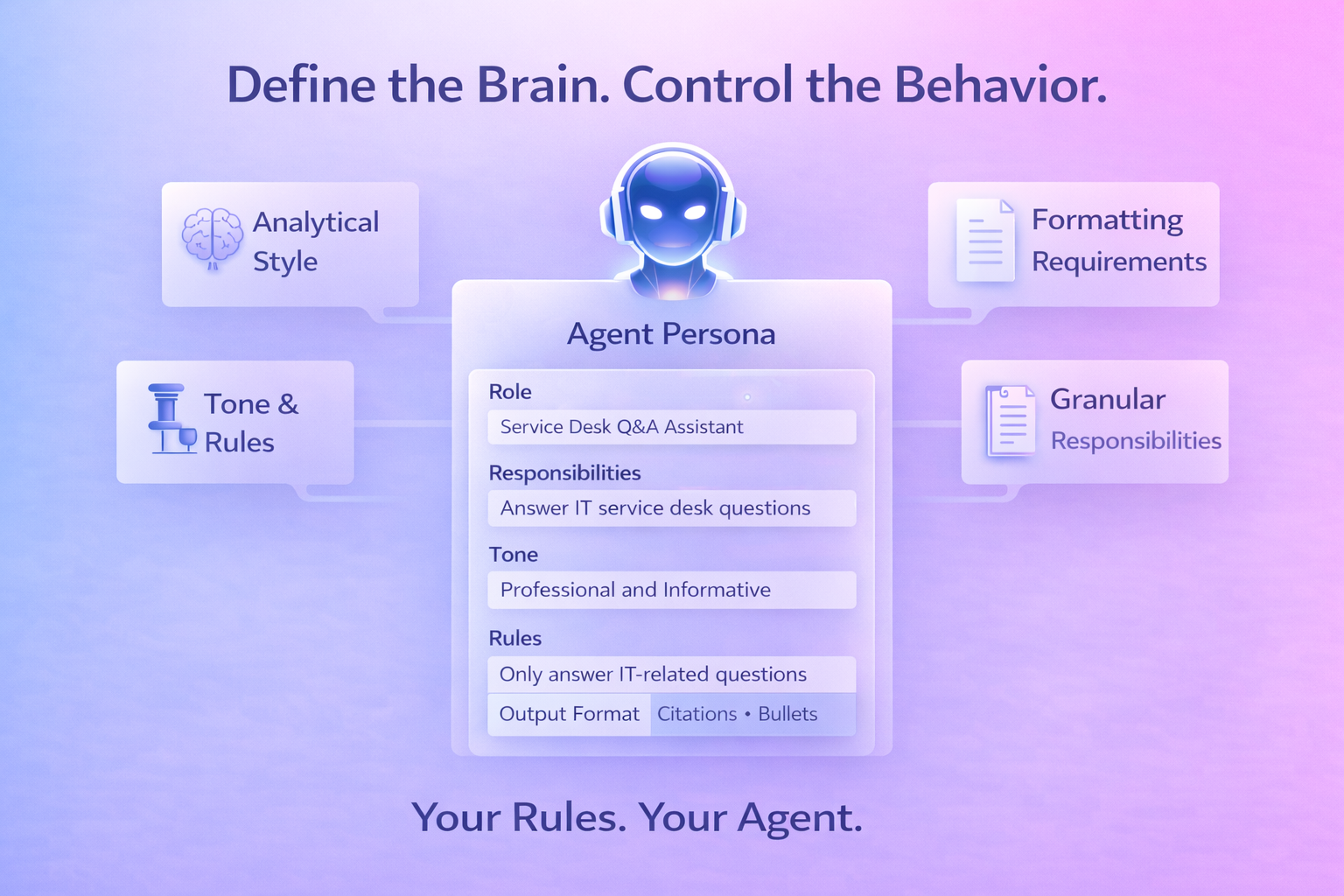
An enterprise-grade AI can't be a generic, unpredictable black box. AI Agents solve this with a core component called the "Persona & Prompt," which serves as the agent's brain. This is far more than a simple instruction; it's a comprehensive "job description and training manual" for your digital coworker, defining its specific role, responsibilities, tone, and behavioral rules.
You can specify everything from its "Analytical style" to its "Formatting requirements," ensuring every action and response is consistent and compliant. For example, an agent can be assigned the "Role: Service Desk Q&A Assistant" and specialized in "answering questions about IT service desk operations." This level of granular control is not just about branding; it’s a critical enterprise control for ensuring compliance, consistency, and auditable AI behavior—something a generic consumer AI simply cannot provide for serious business processes.
3. They Are Grounded in Your Company's Live Data, Not Just the Internet
Consumer AIs learn from the public internet, making them prone to factual errors or "hallucinations" that are unacceptable in a business context. AI Agents overcome this by connecting to "Knowledge Resources," giving them secure access to your company's secure files and databases, not the public library.
This knowledge is "automatically synchronized," ensuring your digital coworker is always working with the most current and relevant information. An agent can be grounded in your live operational data, including:
● Customer records
● Service tickets
● Contract data
● Product documentation
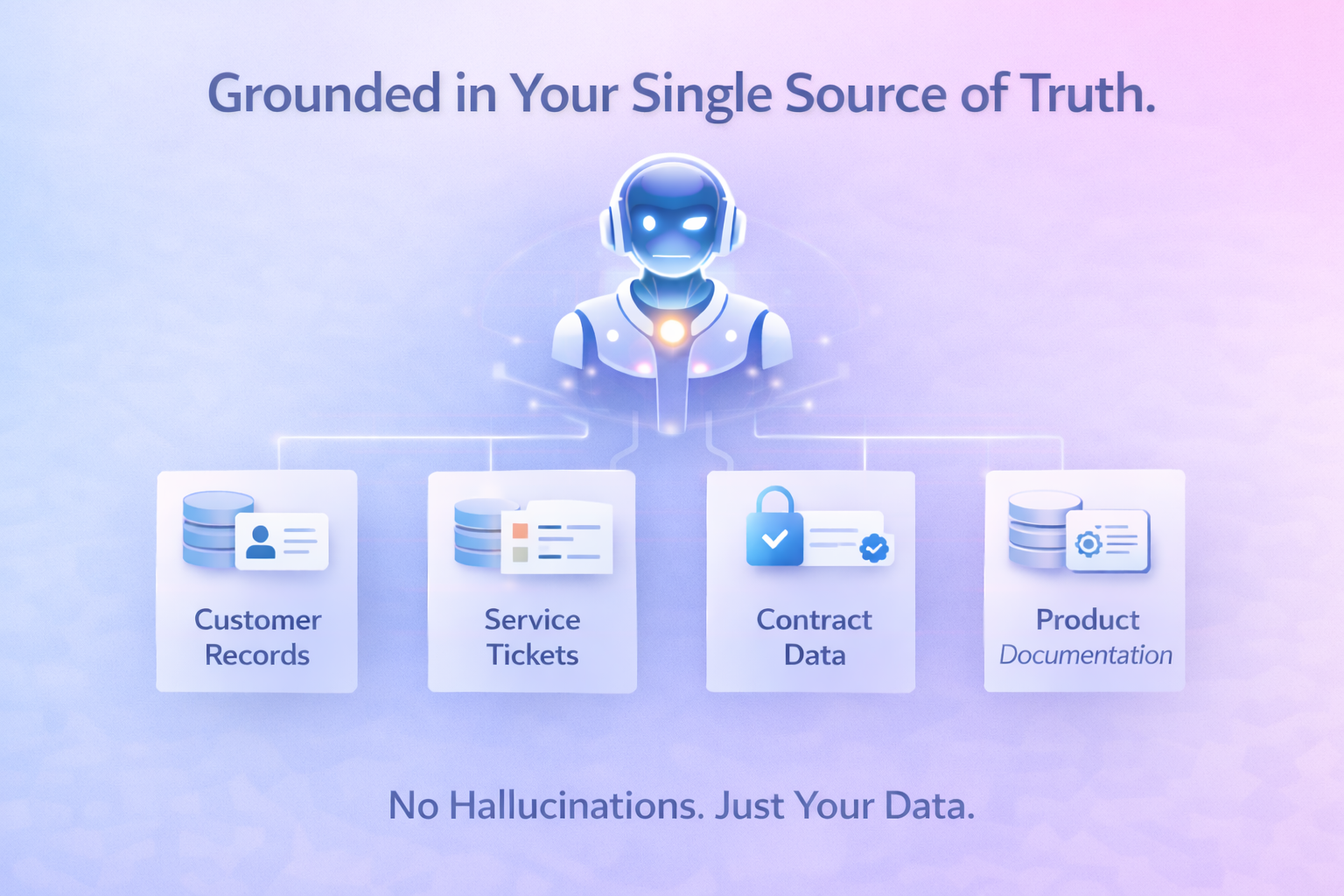
This grounding in proprietary data accomplishes two strategic goals. First, it virtually eliminates the risk of AI hallucinations by forcing the agent to rely on your single source of truth. Second, it transforms your company's unique operational data from a simple asset into a powerful competitive advantage for your AI, enabling context-aware decisions that rivals cannot replicate.
4. You Can Build Teams of AI Agents That Work Together
Perhaps the most forward-looking capability is that these digital coworkers can collaborate as a team. Using a special tool called "Run an Agent," you can build sophisticated, cooperative AI workflows where different agents act like specialists on a digital project team.
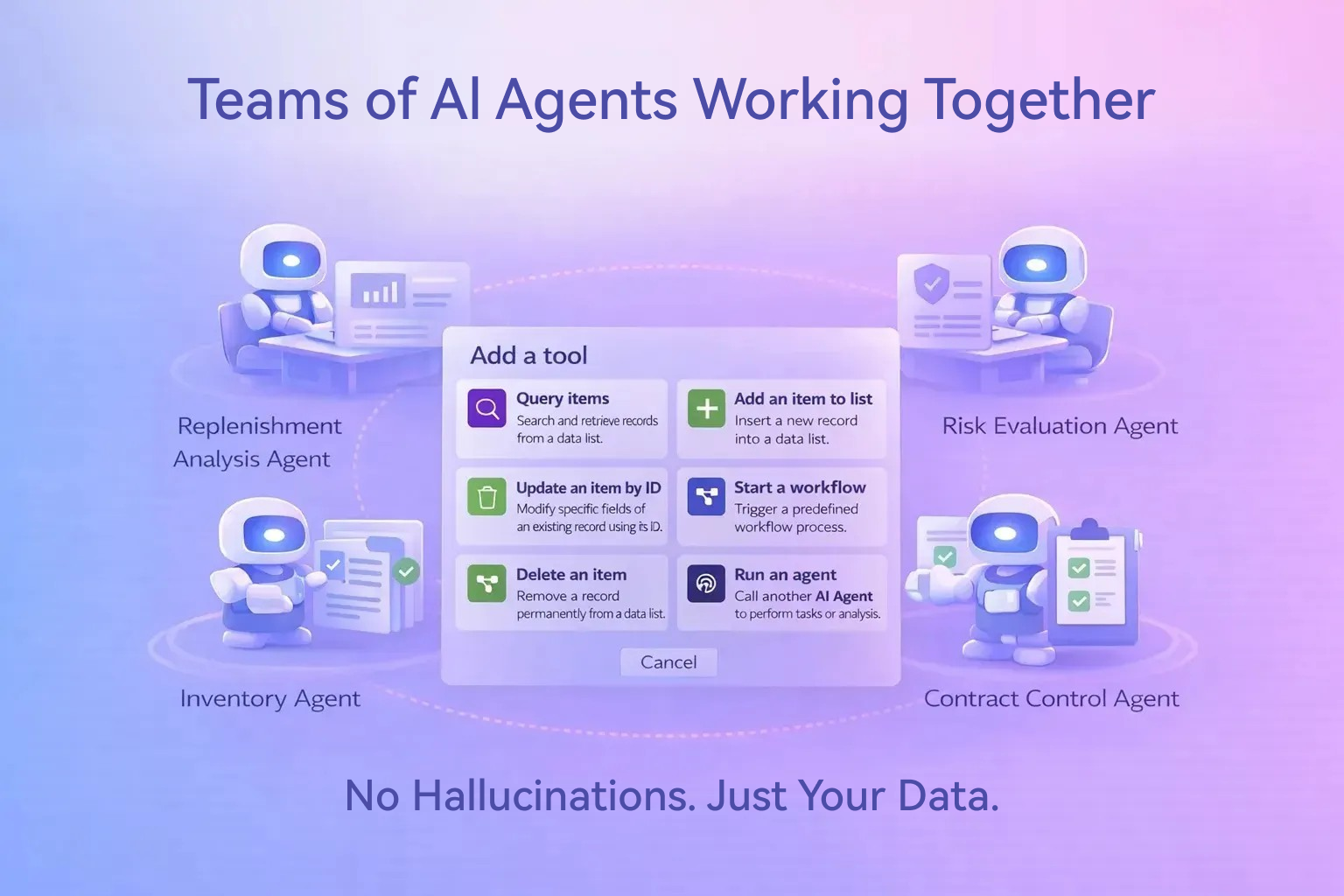
This allows one agent to call another to complete a specialized sub-task, enabling "multi-agent architectures." For instance, "An inventory agent calls a replenishment analysis agent, or a contract agent calls a risk evaluation agent." This capability is the key to automating entire value chains rather than just discrete tasks. It’s how businesses move from simple task automation to true end-to-end process orchestration, assembling a team of AI agents that can solve complex business challenges from start to finish.
Putting Your New Digital Workforce to Work
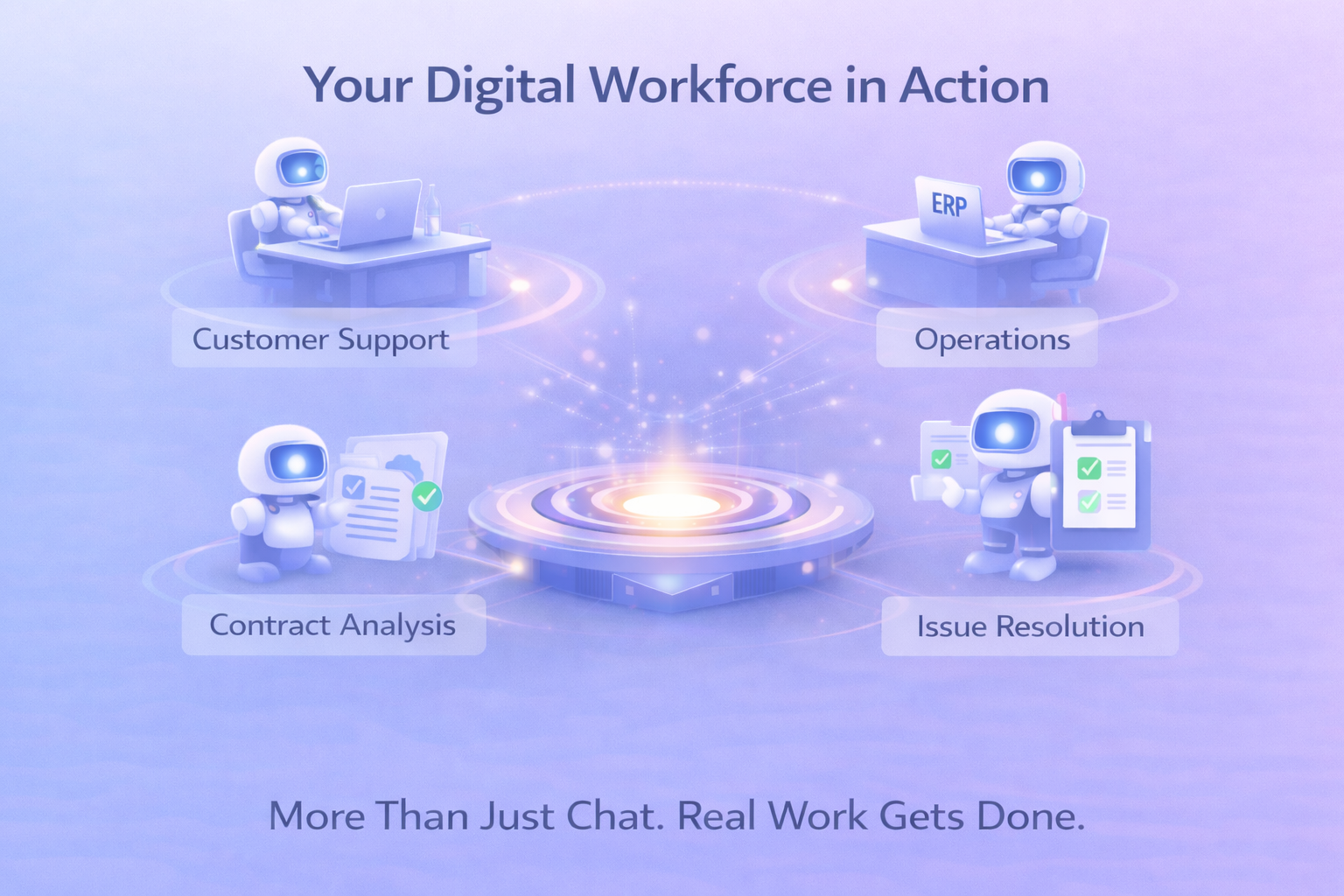
These four pillars—action, control, grounding, and collaboration—are the blueprint for the next generation of enterprise automation. This isn't about better chatbots; it's about building a scalable, reliable digital workforce that operates at the heart of your business. AI Agents are active doers, operating with a customizable personality, grounded in your private data, and capable of collaborating as a cohesive team.
As these AI "employees" become more capable, what is the first manual process you would hand over to your new digital team?